The Best Washington Road Trip: 7-Day Washington National Park Road Trip
Washington has three stunning national parks that are all unique from each other. You can explore rainforests, snow-capped mountains, beaches, waterfalls, and alpine lakes between the three national parks. And the best part? They are all within a few hours of each other, allowing you to visit all three in one week-long trip.
We spent an entire week exploring North Cascades National Park, Olympic National Park, and Mount Rainier National Park, and let me tell you, it was incredible! Each park was stunning in its own way, and the landscapes were breathtaking. I honestly wish we had more than a week because I could have spent a week in each national park! But if you only have a week in Washington, you can easily explore each national park.
If you want to plan the best Washington national park road trip itinerary, you are in the right place! I created a fun 7-day itinerary that explores all three national parks, so you can plan the best trip. Get your cameras and hiking boots ready!
Disclaimer: This post contains affiliate links. If you click through and make a purchase, my blog may receive a commission at no additional cost to you.
Tips for Planning a Washington National Park Road Trip
Give yourself time to drive to each park. Each national park is about 5 hours from each other. When you are planning your road trip, I recommend allocating about 6-7 hours of driving time to each park to cover traffic and any stops along the way.
Arrive at the national parks early. The national park entrances can have long wait lines, and I recommend arriving before 9:00 AM or after 2:00 PM. You can always check the national park webcams to see how traffic is getting into the park as well.
Get your timed entry reservation for Mount Rainier National Park in advance. Mount Rainier National Park now has a timed entry reservation system for July through September and weekends in September and October for the Sunrise Corridor . You should get these as far in advance as possible since Mount Rainier National Park is a busy park. If you do not have a permit, you can still enter the park before 7 AM and after 5 PM.
Pack food and water for your days in each national park. Washington’s national parks do not have many grocery stores, gas stations, and restaurants nearby, and I recommend getting everything you need before you head into the national park.
Get the America the Beautiful Annual Pass. This pass allows you into any national park and federal recreation land for a year!
Always remember to leave no trace. It’s crucial to pack out what you pack in and leave no trash. Some of these spots have trash bins, so you can easily throw your trash away. If they don’t have trash bins, you can throw your trash away at a nearby gas station or convenience store.
Looking for a fun way to track your visits to each national park?
Whether you're road tripping across the country or checking off national parks one weekend at a time, this journal is perfect to capture memories, reflect on experiences, and have a little fun along the way.
Each journal includes:
- full checklist of all U.S. National Parks
- pages for each national park with space for memories, highlights, and photos
- planning checklist to help prep for your next trip
- spots to rank your top parks and memories
- and fun extras like National Park Bingo!
What to Pack for Washington
Mountain weather in Washington can be unpredictable, so it is crucial to pack the right gear and layers for the season you visit.
This is a great baseline for what to pack, and you can adjust as needed:
- hiking boots
- moisture-wicking clothes
- hiking backpack
- food and water
- rain jacket
- fleece jacket
- insulated jacket
- sunscreen
Best 7-Day National Park Road Trip Itinerary
I recommend flying into Seattle-Tacoma International Airport to begin your epic week-long Washington road trip through Washington’s National Parks.
Once you arrive, you can pick up your rental car for the week before beginning one of the best road trips from Seattle. I recommend getting your grocery shopping done before leaving Seattle because there are not many grocery stores near the national parks. Safeway is a great grocery store that has the most variety of food and other products you will need.
Day 1: North Cascades National Park
It is about a 3-hour drive from Seattle to North Cascades National Park. As you drive towards North Cascades National Park, you will be in awe of the incredible mountains!
North Cascades National Park does not require an entrance fee, but it does require a Northwest Forest Pass to park at trailheads. The America the Beautiful Annual Pass allows you to park at the trailheads without an additional fee.
Note: North Cascades National Park can have winter conditions on its trails through July, making it crucial to read trail reviews before planning a hike and to pack the proper hiking gear.
Things to do:
The Gorge Lake Overlook is one of the first viewpoints once you are in North Cascades National Park. The 0.5-mile paved trail provides incredible views of the bright blue waters of Gorge Lake. Before heading back to the car, I recommend crossing the street to the bridge to see the Gorge Creek Falls.
Thunder Knob Trail is a beautiful and easy 3.6-mile trail that has multiple viewpoints overlooking Colonial Peak and Diablo Lake.
Diablo Lake Overlook is one of the most popular spots in North Cascades National Park because the beautiful overlook does not require a hike and provides incredible views of the turquoise waters of Diablo Lake. I highly recommend visiting Diablo Lake Overlook during sunset.
Where to stay:
North Cascades National Park does not have many hotel options in the national park, so if you are not staying in a campground, you will have to find accommodation an hour outside of the park. Marblemount and Winthrop are two small towns that have hotels, gas stations, restaurants, and grocery stores nearby.
Hotels Near North Cascades National Park:
Campgrounds Near North Cascades National Park:

Day 2: North Cascades National Park
I hope you are ready for more stunning views in North Cascades National Park! I recommend waking up early because you have a fun-filled day hiking and exploring the park before beginning the drive to Olympic National Park.
It is a 5+ hour drive to Port Angeles in Olympic National Park from North Cascades National Park. There are multiple ferries you can take to get to Olympic National Park, or you can drive the entire way. Both take about the same amount of time.
Pro tip: Check the ferry webcams before deciding what you want to do. Sometimes, the wait to take the ferry can be over an hour because Olympic National Park is one of the most popular road trips from Seattle.
Things to do:
Washington Pass Overlook is one of the most accessible trails in North Cascades National Park. An easy half-mile paved path leads you to an incredible view of Liberty Bell and Washington Pass. After the first overlook, the trail becomes steep and unpaved and brings you to a higher viewpoint.
Heather-Maple Pass will be one of your favorite hikes in North Cascades National Park because, in my opinion, it is one of the most beautiful places in Washington! The beautiful 7.2-mile trail brings you over two passes that offer endless views. I recommend hiking the Heather-Maple Pass Loop counterclockwise and heading to Heather Pass first. I also recommend visiting Lake Ann and Rainy Lake, which have trails off of the Heather-Maple Pass Loop!
If you want to enjoy a shorter hike, Blue Lake is the perfection option! The 4.4-mile hike leads to an incredible alpine lake surrounded by wildflowers, mountains, and meadows.
If you have time once you arrive in Olympic National Park, I highly recommend watching the sunset on Hurricane Ridge. Hurricane Ridge is a beautiful 17-mile scenic drive that leads to the Hurricane Ridge Visitor Center, which has breathtaking views overlooking the mountains of Olympic National Park.
Where to stay:
Port Angeles and Forks are the best places to stay when you visit Olympic National Park because have plenty of lodging options, restaurants, and gas stations, and they are near many must-see attractions.
Port Angeles is in the northern section, while Forks is in the west by the ocean. There are also many other towns near Olympic National Park with accommodations.
Port Angeles Hotels:
Port Angeles Campgrounds:
- Olympic Peninsula/Port Angeles KOA
- Heart O' the Hills Campground
- Fairholme Campground
- Elwha Dam RV Park
- Salt Creek Campground
Forks Hotels:
Forks Campgrounds:


Day 3: Olympic National Park
It is time to explore Olympic National Park! This park surprised me the most because of its diverse landscapes. Can you believe you can explore snow-capped mountains, rainforests, and beaches all within one national park? Trust me, it is amazing!
Note: Olympic National Park is the most visited national park in Washington, with over 3 million visitors per year. It can be very crowded, and sometimes the park staff will stop traffic at park entrances if the parking lots are overflowing, so I recommend starting your day early.
Things to do:
If you were not able to visit Hurricane Ridge for sunset, I highly recommend going for sunrise. The views from the parking lot are breathtaking no matter what time of day you visit! You can also hike the 3.2-mile trail to Hurricane Hill.
Mount Storm King is one of the most popular hikes in Olympic National Park. The strenuous 4-mile trail provides beautiful views overlooking Lake Crescent.
Note: This is a strenuous hike and gains over 2,000 feet of elevation. Just before the lookout, multiple sections require you to use a rope to climb up the trail. There is a long drop-off next to the trail, making it crucial to be very careful hiking this section. If you are afraid of heights, I recommend skipping this hike.
Marymere Falls is one of the most beautiful waterfalls in Olympic National Park. The easy 1.8-mile trail begins on the same trail as Mount Storm King and leads you to an upper viewpoint and lower viewpoint. In my opinion, the lower viewpoint provides the best views. If you hike Mount Storm King, you can add this to your hike before heading back to the parking lot.
If you visit in the summer, I highly recommend taking a dip in Lake Crescent. There are a few small beach areas across from the Storm King Ranger Station.
Rialto Beach is one of several incredible beaches in Olympic National Park, and it was my favorite sunset spot. The beach has large pieces of driftwood and sea stacks. You can also hike to the infamous Hole-in-the-Wall, an easy 1.5-mile trail that travels along Rialto Beach to a beautiful sea stack with a hole in it. People come here to take the classic photo of standing in the sea stack.
Note: Make sure to check the tide schedule posted before the trail near the restrooms before hiking to the Hole-in-the-Wall. It is a classic spot to watch the sunset, but high tide makes it nearly impossible to hike along the beach because the water comes up to the stacks of driftwood.


Day 4: Olympic National Park
Get ready for another fun-filled day exploring more of Olympic National Park! This day explores rainforests and more beautiful beaches, and trust me when I tell you that you will be in awe of the stunning landscapes.
Once you are finished exploring Olympic National Park, you will begin the 5-hour drive towards the Paradise section of Mount Rainier National Park. The drive does not include a ferry ride, so you do not have to worry about that.
Things to do:
If you are feeling up for it, you could get up for the early morning golden hour on Third Beach, Second Beach, or First Beach. Third Beach is the most accessible of the three, only requiring a short walk from the parking lot to the beach. Second Beach is the most beautiful, in my opinion, and requires a 2-mile hike. First Beach requires a 3-mile hike. No matter which beach you choose to visit, you will have stunning ocean views.
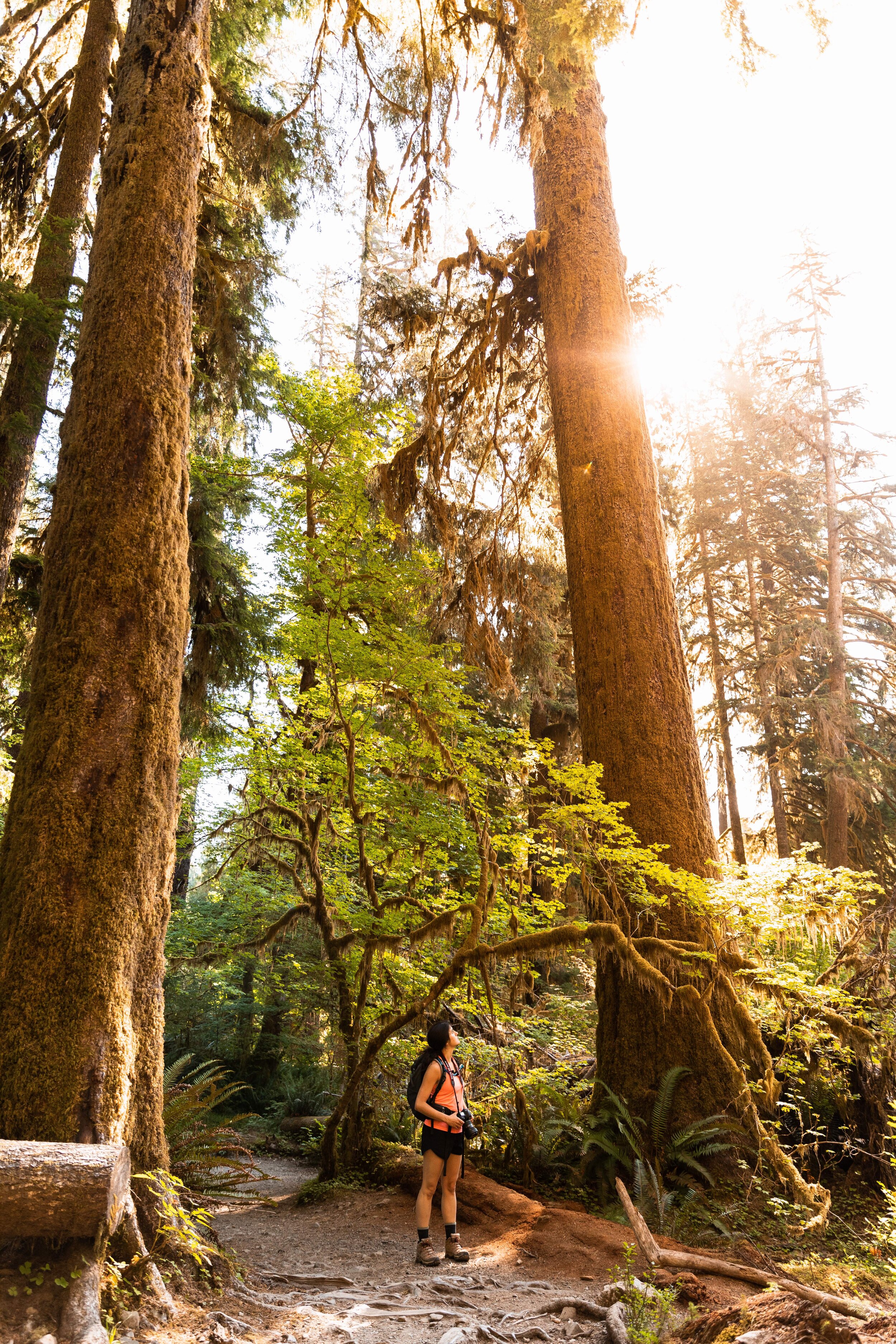
After taking in the ocean air, it is time to visit Olympic National Park’s most popular rainforest! Hoh Rainforest is a stunning rainforest that used to be a part of a larger one, spanning from California to Alaska. I highly recommend hiking the Hall of Mosses Trail, an incredible 0.8-mile trail that travels through huge moss-draped trees in an old-growth forest. The 1.2-mile Spruce Nature Trail is another easy hike that loops through new-growth and old-growth forests along the Hoh River.
Ruby Beach is yet another beautiful beach in Olympic National Park. There are multiple areas along Ruby Beach that all offer incredible views of sea stacks in the ocean.
Did you know Olympic National Park has another rainforest?! Quinault Rainforest is not as well-known as Hoh Rainforest, but it is just as beautiful. If you visit, I recommend hiking the Quinault Rainforest Nature Trail, a 0.5-mile loop that travels under stunning moss-draped trees and connects with many other trails that travel along creeks and to waterfalls.
Where to stay:
The most common place to stay near Mount Rainier National Park is Ashford, which is 45 minutes from Paradise and 2 hours from the Sunrise Visitor Center. The small town has hotels, gas stations, restaurants, and grocery stores.
Mount Rainier has a few other small towns nearby you can find accommodations in case the ones in Ashford are booked up.
Hotels Near Mount Rainier National Park:
Campgrounds Near Mount Rainier National Park:

Day 5: Mount Rainier National Park
You will close out this fun road trip in Mount Rainier National Park, which is many people’s favorite national park in Washington. If Mount Rainier is out of the clouds when you visit, you will be in awe of how beautiful it is!
Mount Rainier has five sections: Longmire, Paradise, Ohanapecosh, Sunrise, and Carbon River/Mowich Lake. Sunrise and Paradise are the most popular and can become very crowded early in the day. Hotels and campgrounds near Sunrise and Paradise book up quickly, so I highly recommend booking your accommodations as early as you can.
Note: Mount Rainier National Park is the second most visited national park in Washington, with over 2 million visitors per year. The most popular sights become very crowded midday, so I recommend arriving before 8:00 AM or after 4:00 PM. Most of the parking lots are large and have overflow parking, but they fill up quickly, especially on weekends.
Things to do:
Comet Falls is one of the most beautiful waterfalls in the park, standing at 300 feet tall. The 3.8-mile trail gains over 1,000 feet of elevation, most of which is gained as you climb a ladder on a rock face. Once you are past that section of the trail, you are rewarded with the first of many viewpoints of Comet Falls. The best view is at the very end of the trail where you have an up-close and personal experience with the waterfall.
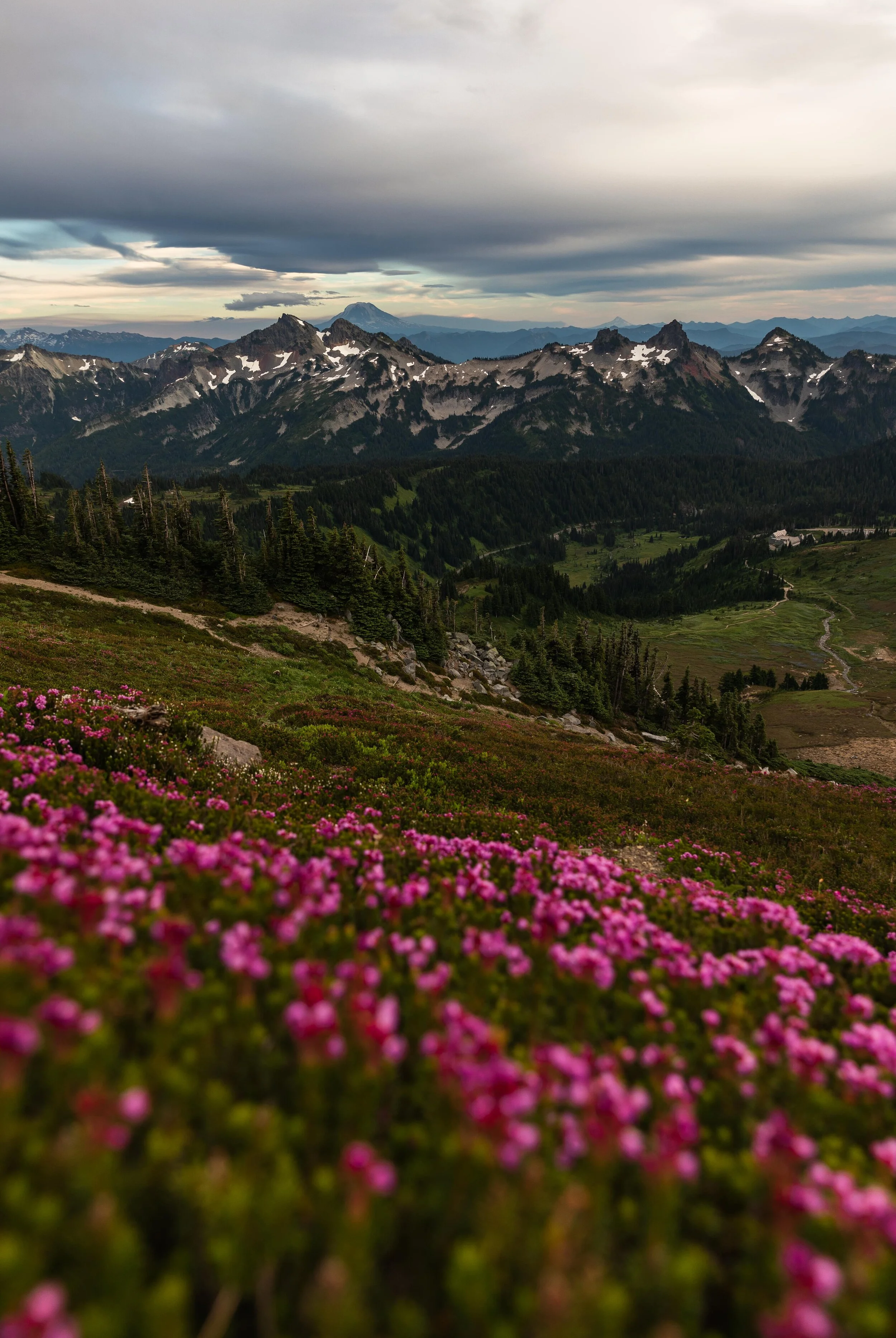
The Skyline Trail is one of my favorite hikes in Mount Rainier National Park, so I know you will love it! The 6-mile trail loops you through wildflowers, past glaciers, and near waterfalls while providing incredible views of Mount Rainier. It also brings you to Panorama Point, which offers incredible views of Mount Adams, Mount St. Helens, and Mount Hood on clear days. The Skyline Trail connects with a large trail system, making it very important to pay close attention to every trail sign to make sure you are on the correct trail.
If you are looking for a short but rewarding hike, the Alta Vista Trail is perfect. The 1.8-mile trail travels through meadows of wildflowers while providing incredible views of Mount Rainier.
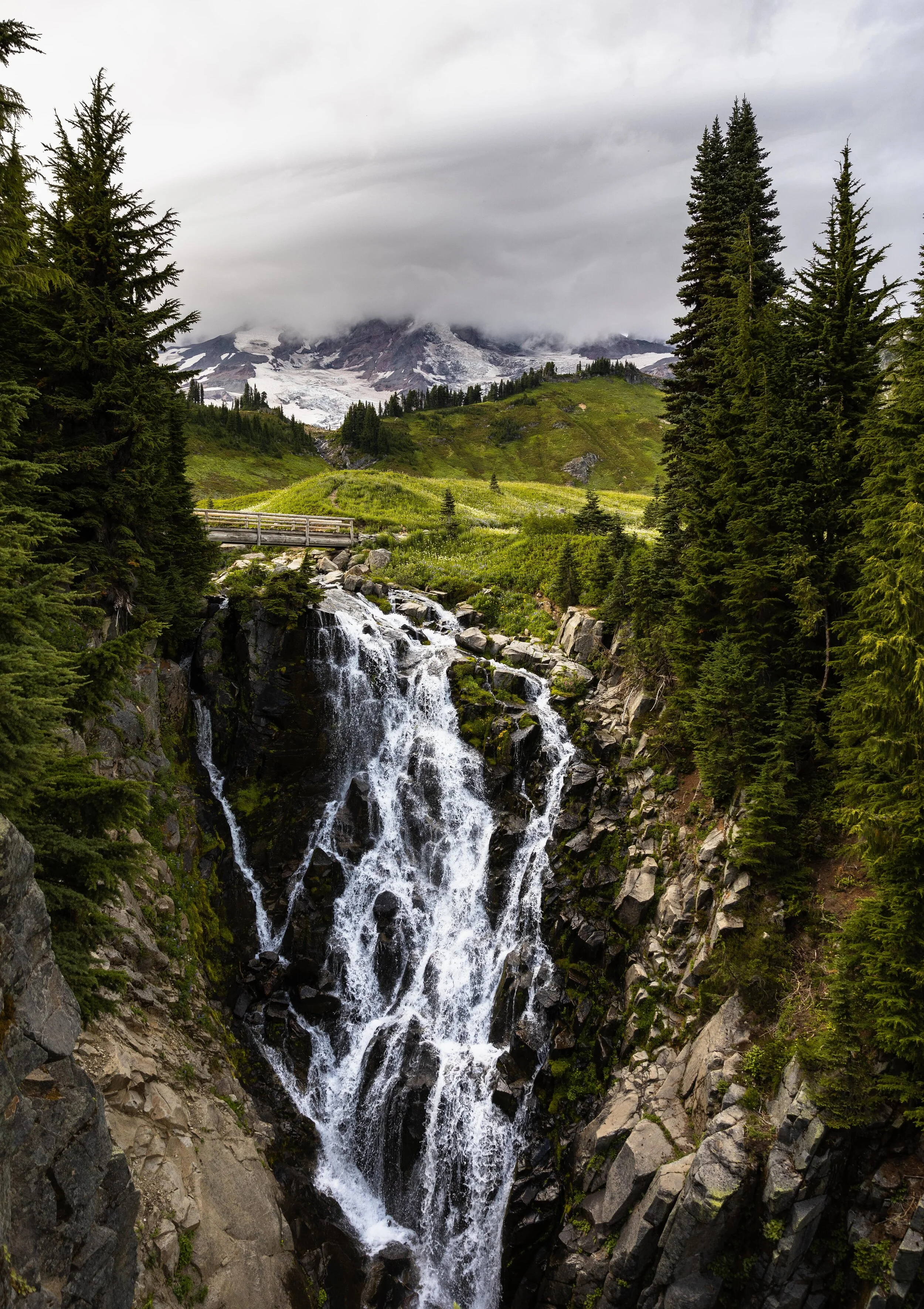
Myrtle Falls is another beautiful waterfall that is perfectly positioned underneath a view of Mount Rainier. You will see many photographers with tripods hiking the 0.8 miles to get the classic shot!
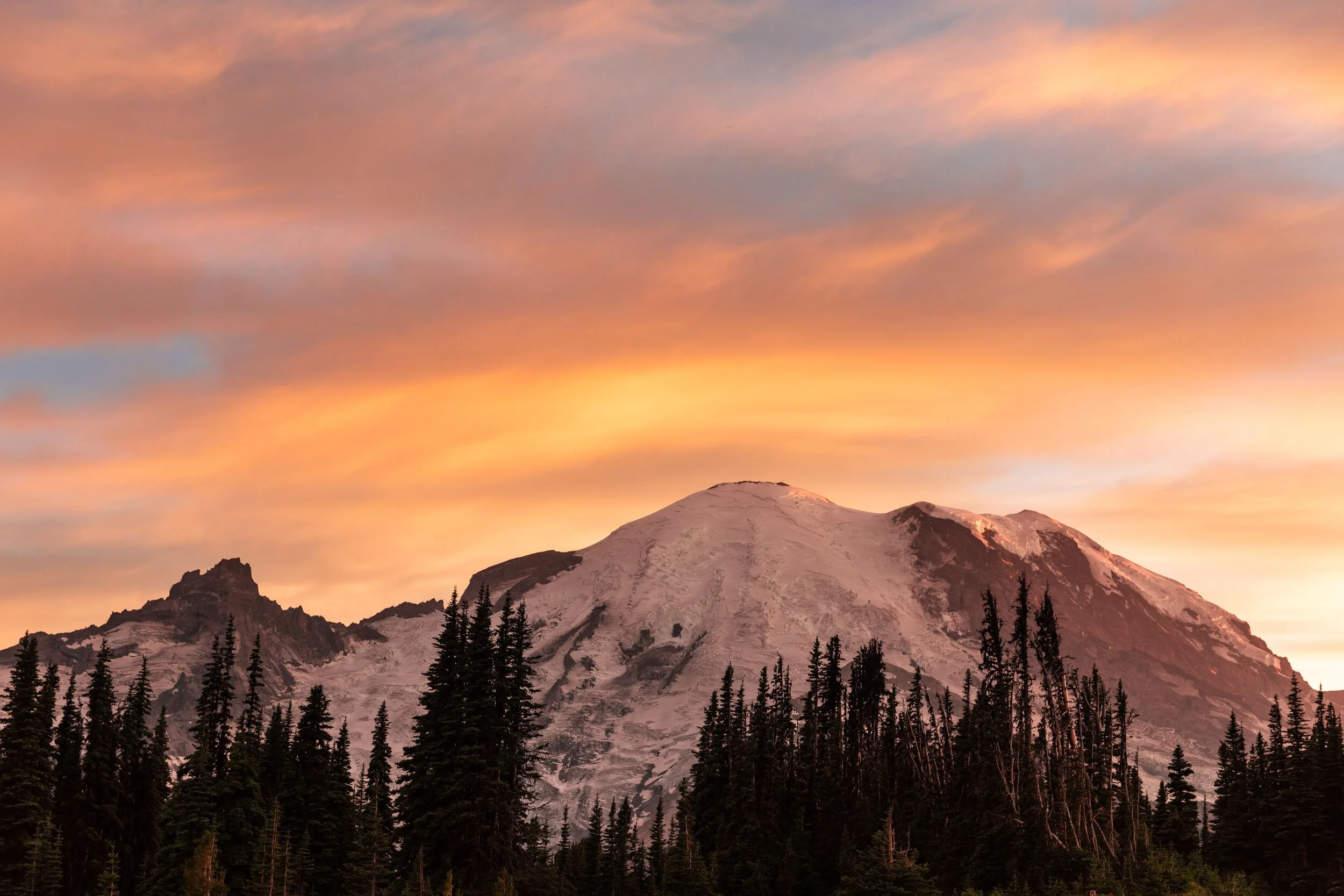
Reflection Lake is the perfect spot to end your day and watch the sunset. When the water is calm, you can capture a beautiful reflection of Mount Rainier in Reflection Lake.

Day 6: Mount Rainier National Park
Today is your last full day in Mount Rainier National Park, and you are going to make the most of it! The day will be filled with the most hiking you will do on your Washington road trip, so make sure to fuel up and pack a lot of food before heading out for the day.
Things to do:
Grove of the Patriarchs (NOTE: Currently closed due to trail damage. Read more here.) is a classic hike in Mount Rainier National Park. The easy 1.5-mile trail travels past some of the largest trees you will ever see, including cedars, hemlocks, and Douglas-firs that are 40 feet wide and 300 feet tall! The trail will leave you feeling small in a good way.
If you are feeling up to adding a short but sweet hike to your day before heading to the Sunrise section of Mount Rainier National Park, the Naches Peak Loop is perfect! The easy 3.2-mile trail brings you through beautiful wildflower fields and provides incredible views of Mount Rainier.
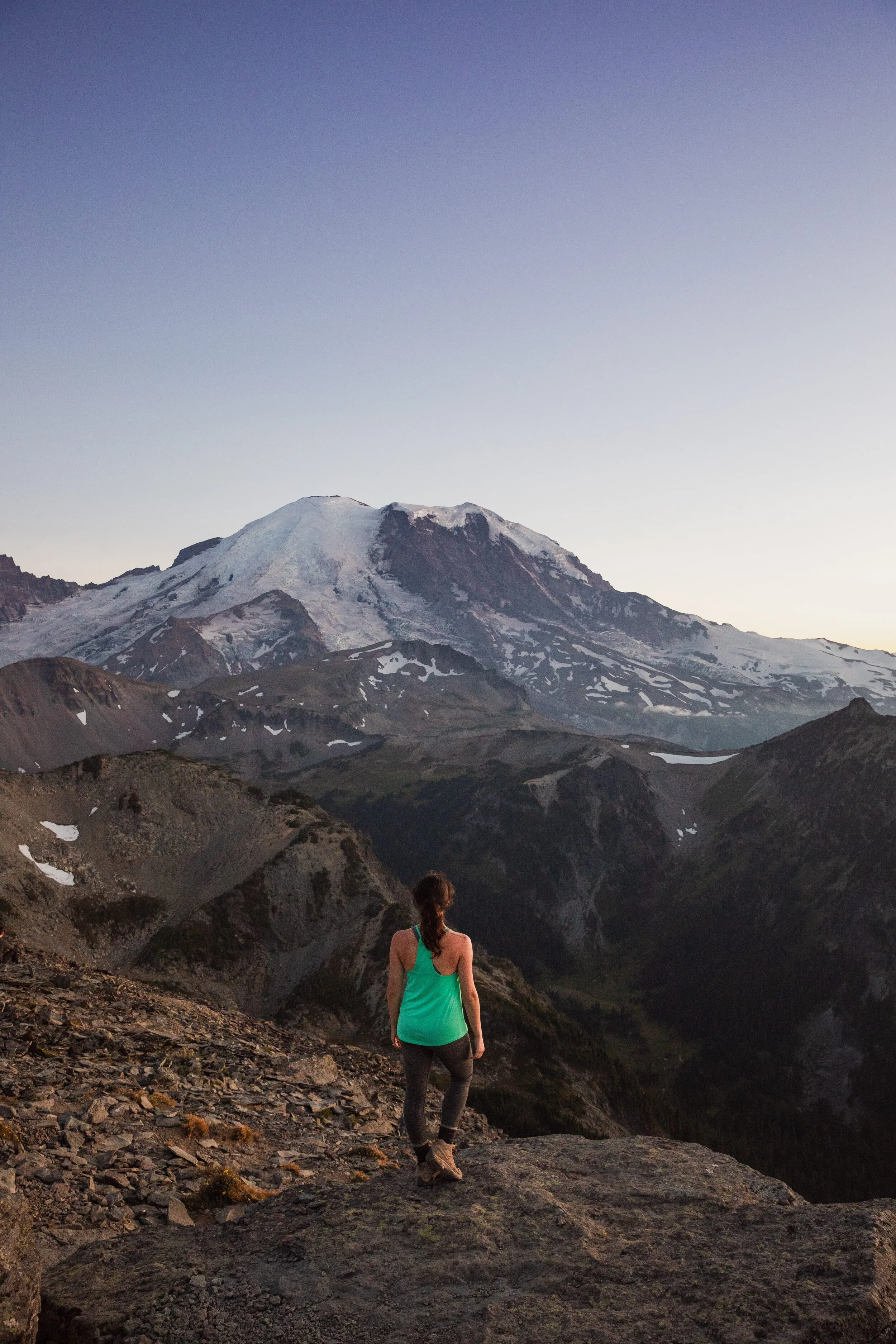
Burroughs Mountain Trail is a strenuous 9-mile hike beginning at the Sunrise Visitor Center that travels over three mountains: First Burroughs, Second Burroughs, and Third Burroughs. If you are not up to hike the entire trail to Third Burroughs, you can turn around at First Burroughs or Second Burroughs. All three peaks have incredible views of Mount Rainier!
Now it is time to relax before your sunset hike to Fremont Lookout! The 5.6-mile trail leads you to breathtaking 360-degree views of Mount Rainier, Berkeley Park, and Grand Park. Fremont Lookout was one of our favorite spots in Mount Rainier National Park!
Where to stay:
What a long but incredible day! Can you believe it is the last night of your Washington state road trip through Washington’s national parks? The only thing I didn’t enjoy about the Sunrise section in Mount Rainier National Park is the lack of accommodation options. You can continue staying in the same accommodation in Ashford or move closer to the Sunrise section.
White River Campground and Silver Springs Campground are great options for campgrounds. The closest hotel is the Alta Crystal Resort, but it can be pricey. There are also a few hotels near Enumclaw in the northern section of Mount Rainier National Park.


Day 7: FInal Day in Washington
It is finally your last day in Washington! Depending on when your flight is, there are a few other things you can do before leaving Washington.
Things to do:
Suntop Lookout is an incredible way to say goodbye to Mount Rainier. If the gate near the top is open, you can drive to the top of Suntop Lookout, but if it is closed, you will have to one mile to the top. Either way, you have incredible views of Mount Rainier.
Tolmie Peak Lookout has one of the four remaining historic fire towers in Mount Rainier National Park. The 6.5-mile trail travels along the largest lake in the national park, Mowich Lake, through an old-growth grove, and under basalt columns before leading you to stunning views of Mount Rainier.
NOTE: The State Route 165 Carbon River Fairfax Bridge is closed until further notice, making this area currently inaccessible. For the latest updates, please visit WSDOT’s website.
If you want to do something more relaxing, you can explore Seattle! There is so much to do and see, including a tour of the Seattle Underground. The Seattle Underground is a series of basements and hallways of the old city that the new city was built over. It is pretty cool to learn about it!
If you want to plan the best road trip itinerary through the national parks in Washington, this guide is for you! This week-long Washington national park road trip itinerary explores some of the most beautiful areas in the state, so I know you will have so much fun when you visit.

Hey, I’m Nichole!
I am the creator behind Nichole the Nomad, the home of my explorations around the world, mountain hikes, and beautiful pictures taken along the way. I have a deep passion for capturing the world in a beautiful light and sharing my experiences.
I created this blog to share my travels, show how beautiful the world is, provide tips and tricks for traveling, and encourage you to explore. Whether you want to travel across the world or explore what’s in your backyard, I hope this blog inspires you to get outside and find your adventure!
Pin it for later!