The Best Rocky Mountain National Park 2-Day Itinerary
If you want to spend 2 days in Rocky Mountain National Park, you are in the right place!
Rocky Mountain National Park is one of the most visited national parks in the United States for good reasons! Each year, over four million people travel from all over the world to explore this beautiful national park and take in the gorgeous mountain views.
The 265,000-acre park offers mountain views, waterfalls, alpine lakes, and wildlife, and you do not have to go far from your car to take in the scenery. Whether you want to enjoy a scenic drive, hike to alpine lakes, or stroll along easy trails, there is something for everyone.
We spent a few days exploring as much of the park as we could, and let me tell you, it did not disappoint! The mountains and alpine lakes were as stunning as we imagined, and we loved that no matter where you looked, we had views for days.
Although you could spend a week exploring everything Rocky Mountain National Park offers, you can see many must-see attractions in a few days. I created this guide with everything you need to plan the best 2-day Rocky Mountain National Park itinerary.
Get your hiking boots and cameras ready for an amazing trip!

Disclaimer: This post contains affiliate links. If you click through and make a purchase, my blog may receive a commission at no additional cost to you.
Things You Need to Know for Visiting Rocky Mountain National Park
Get your timed entry permit in advance. Rocky Mountain National Park has a timed entry permit system for the summer and fall, and the slots fill up quickly. I highly recommend reserving yours as soon as they are released, especially if you want to visit Bear Lake Corridor. The Bear Lake Corridor time slots for peak season fill up the same day they are released because it is one of the most popular areas in the park. The National Park Service has the release schedule on its website, making it easy to find. If you do not have a timed entry slot, you can enter Bear Lake Corridor before 5 am or after 6 pm and the other sections of Rocky Mountain National Park before 9 am or after 2 pm.
Trail Ridge Road is open seasonally. The iconic scenic drive in Rocky Mountain National Park is not open in winter and early spring. The park usually does not plow Trail Ridge Road until Memorial Day weekend and closes it at the end of October, depending on the weather. The road was plowed a week before we visited, so we lucked out!
Start your day early. I highly recommend starting your day early to enjoy the park with fewer crowds and avoid long wait times at the park entrances. Rocky Mountain National Park also has afternoon thunderstorms in the summer, and during the few days we were there, we saw a storm every day! I recommend starting your day as early as you can to avoid getting caught in a thunderstorm.
Take it slow. Many of the best things to do in Rocky Mountain National Park are at high elevations, and if you are not acclimated, you could get altitude sickness. I recommend taking it slow to ensure you get used to the altitude.
Pack layers. Rocky Mountain National Park has unpredictable weather, especially on Trail Ridge Road. I recommend packing layers to accommodate any weather you may run into. Snow can also linger on some trails through June, making it crucial to research trail conditions to ensure you have the correct hiking gear. If you need to rent microspikes, plenty of stores in Estes Park have them. We rented ours from Scot’s Sporting Goods.
Wear sunscreen. Because you are at a higher elevation in the park and closer to the sun, you can get a sunburn easily. We learned this the hard way on our first day! Make sure to apply plenty of sunscreen before heading into the park.
Expect crowds. Rocky Mountain National Park is among the most visited national parks, and each attraction will have crowds. There is also a high chance of lines at the entrance stations. If you have a midday timed entry, I recommend arriving early to give yourself plenty of time in case there is traffic entering the park. When we left the park around noon one day, the line at the entrance station was over two miles long!
Be flexible. There will likely be crowds in the park, especially in the summer. Make sure your itinerary is flexible, as there may be times when you cannot find parking at a viewpoint or trailhead.
Always remember to leave no trace. It is crucial to pack out what you pack in and leave no trash. Some spots have trash bins, so you can easily throw away your trash. If they do not have trash bins, you can throw away your trash in a barrel at a nearby gas station or convenience store.
Looking for a fun way to track your visits to each national park?
Whether you're road tripping across the country or checking off national parks one weekend at a time, this journal is perfect to capture memories, reflect on experiences, and have a little fun along the way.
Each journal includes:
- full checklist of all U.S. National Parks
- pages for each national park with space for memories, highlights, and photos
- planning checklist to help prep for your next trip
- spots to rank your top parks and memories
- and fun extras like National Park Bingo!
Logistics for Planning Your Rocky Mountain National Park Trip
Where to Fly Into
The biggest and most convenient airport to fly into is Denver International Airport. It has the most direct flights and is less than two hours from Estes Park.
The Denver International Airport will also have the most rental cars.
We flew into this airport because it had the best direct flight options for us. And it was really easy to pick up our car and begin our road trip!
Where You Should Stay
Estes Park is the best place to stay near Rocky Mountain National Park because it is near the east park entrances.
The town also has many accommodations, restaurants, and shops. Because Rocky Mountain National Park is one of the most visited national parks in the United States, the accommodations in Estes Park are pretty pricey. But it is nice to be within a 15-minute drive of the Beaver Meadow and Fall River entrances.
There are also a few other towns you can stay in that offer less expensive accommodations and are closer to other parts of the park.
Hotels in Estes Park:
Campgrounds in Estes Park:
What You Should Pack
The weather in Rocky Mountain National Park is unpredictable, making it crucial to pack the right gear and layers for the season you visit. When we visited in June, we experienced sun, snow, and rain, and sometimes all in one day!
Remember that you are at a higher elevation, especially along Trail Ridge Road. You will want to pack layers because it will be chillier than in Estes Park.
This is a great baseline for what to pack, and you can adjust as needed:

How to Spend 2 Days in Rocky Mountain National Park
This Rocky Mountain National Park 2-day itinerary explores some of the best things to do in the park, including scenic drives, waterfalls, mountain views, and alpine lakes! It also includes some easy hikes with a few longer trails if you want a more strenuous adventure.
If you stay in Estes Park for your trip, you will enter the park from the Beaver Meadows or Fall River entrances. Both entrances are perfect for accessing the Trail Ridge Road.
Itinerary Overview
Day 1:
Trail Ridge Road
Alpine Ridge Trail
Toll Memorial Trail
Ute Trail to Tombstone Ridge
Old Fall River Road
Day 2:
Bear Lake, Nymph Lake, Dream Lake, and Emerald Lake
Lake Haiyaha
Alberta Falls
Sprague Lake
Moraine Park
Day 1: Trail Ridge Road
During your first day in the park, you have two options. You can begin your day exploring Trail Ridge Road or drive Old Fall River Road to the Alpine Visitor Center, then take Trail Ridge Road back to Estes Park. It is a fun loop and a great way to explore two beautiful scenic drives in Rocky Mountain National Park.
Trail Ridge Road
Trail Ridge Road is the iconic 48-mile scenic drive in Rocky Mountain National Park, linking Estes Park to Grand Lake. If you do not want to drive all the way to Grand Lake, you can turn around near Fairview Curve or Medicine Bow Curve.
I recommend taking your time during your first day in the park, stopping at the many overlooks, and enjoying some easy hikes. Each viewpoint offers beautiful views, and you will not be disappointed!
Here are some of my favorite viewpoints along the road:
Many Parks Curve
Rainbow Curve
Forest Canyon Overlook
Gore Range Overlook
Alpine Visitor Center
Medicine Bow Curve
Fairview Curve


Alpine Ridge Trail
Alpine Ridge Trail is one of the most iconic hikes along Trail Ridge Road because it starts at the highest national park visitor center in the United States.
The 0.6-mile trail is relentless, steadily gaining elevation, but it is worth the effort for the beautiful views at the top!
Toll Memorial Trail
Toll Memorial Trail is another beautiful and easy hike off Trail Ridge Road and one of my favorite hikes in the park. The 1.1-mile trail has my favorite views!
The Toll Memorial Trail offers stunning mountain views along the entire hike! The end has a short, steep climb to the memorial, offering additional 360-degree panoramic views.
The trail will quickly become one of your favorites!
Ute Trail to Tombstone Ridge
If you want a longer hike, you are in luck!
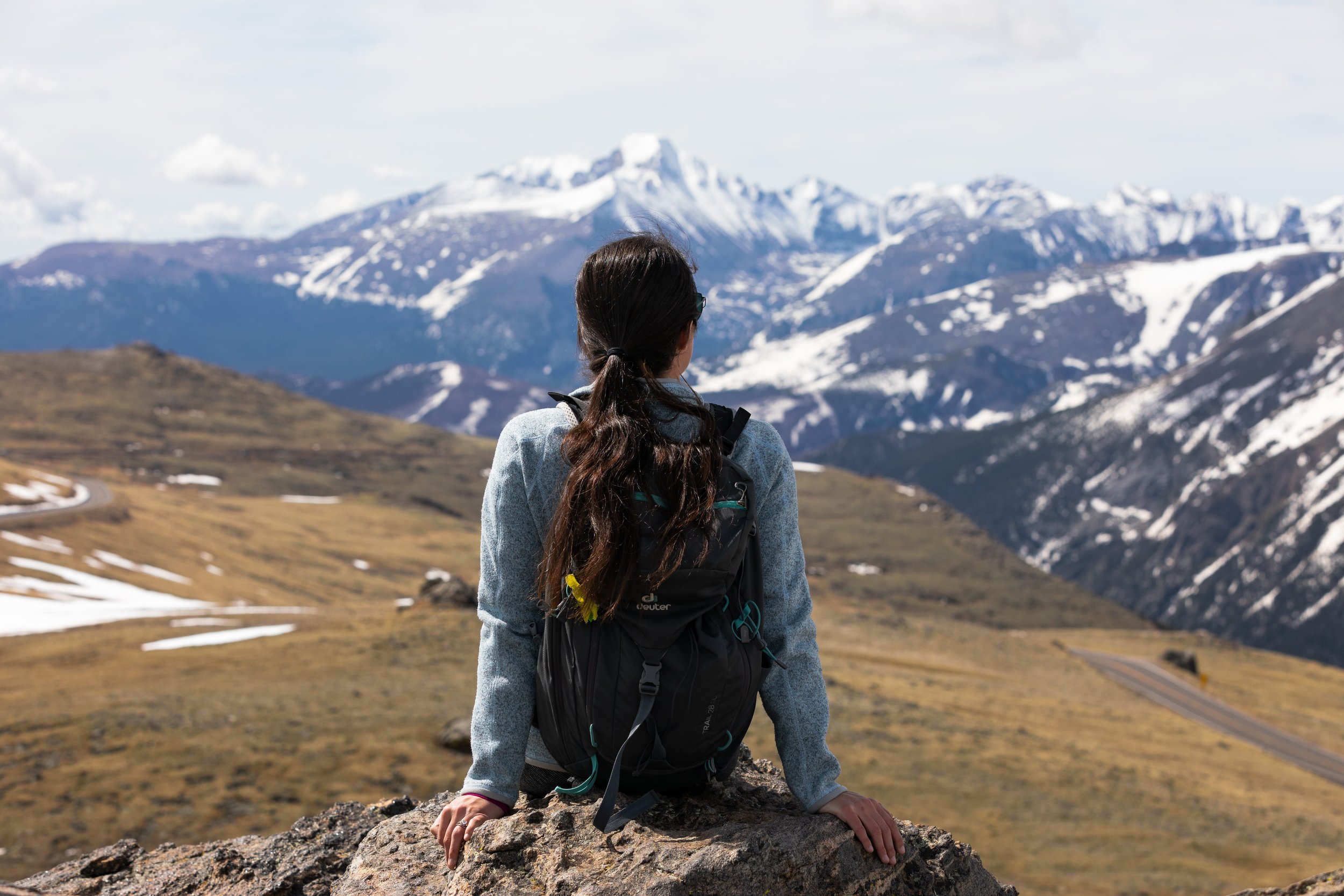
Ute Trail to Tombstone Ridge is a beautiful 3.8-mile hike with breathtaking views of Longs Peak and the surrounding mountains. It is also a great trail to see elk and marmots!
We absolutely loved this trail!


Old Fall River Road
If you visit when Old Fall River Road is open, you will be in for a treat! Usually, it opens in mid-July and closes in October.
This beautiful 9-mile, one-way scenic drive links Estes Park to the Alpine Visitor Center and offers incredible views of mountains and waterfalls. It is also a great place to see wildlife.
You also have the opportunity to enjoy many hiking trails, with a few of my favorites being Marmot Point Trail (easy/moderate), Ypsilon Lake Trail (strenuous), and Alluvial Fan Trail (easy).
As I mentioned earlier, you could drive Old Fall River Road when you first enter the park and then explore Trail Ridge Road as you head back to Estes Park.

Day 2: Bear Lake Corridor
Your second and final day in Rocky Mountain National Park explores Bear Lake Corridor, known for having some of the most beautiful trails, making it a popular area.
The best part is it has hikes for all levels! You can enjoy an easy stroll around lakes or a strenuous hike to an alpine lake. No matter what trails you hike, you will love visiting this area!
And if you do not want to hike in Bear Lake Corridor, you can head back to Trail Ridge Road or Old Fall River Road to explore areas you may have missed on your first day.
Bear Lake, Nymph Lake, Dream Lake, and Emerald Lake
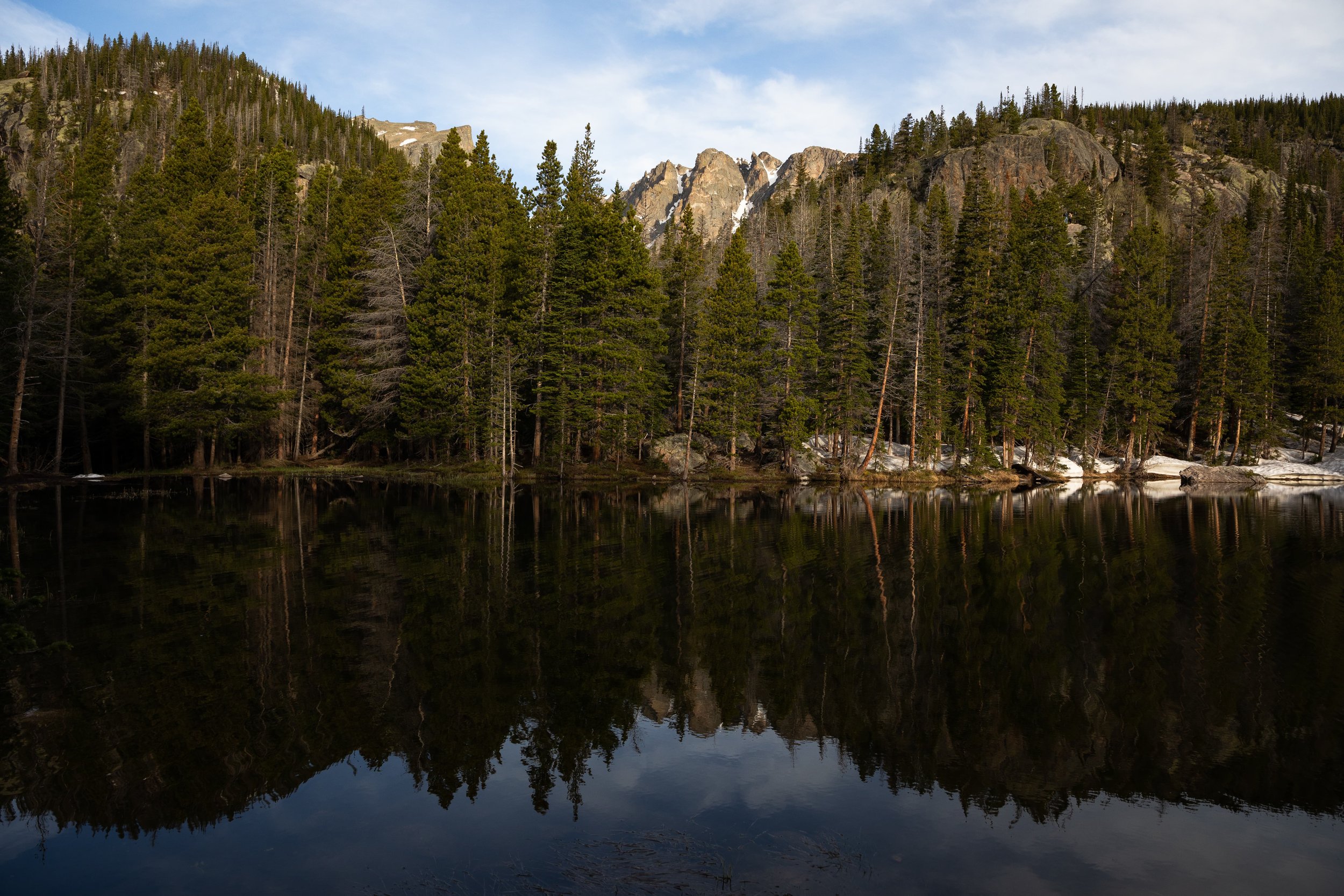
Bear Lake Corridor has some of the most beautiful alpine lakes, so I recommend starting your morning hiking to one or all of them!
If you want to hike to four alpine lakes, I recommend hiking the 3.8-mile trail to Emerald Lake, Dream Lake, Nymph Lake, and Bear Lake. Emerald Lake and Dream Lake are my favorite lakes along this route, and I know you will fall in love with this hike!

The hike is not super strenuous, but it will make you work for the views. We hiked this at the beginning of June, and the trail past Nymph Lake had a lot of snow. We were glad we rented microspikes for the hike!

If you want to cut the hike in half, you can hike to Bear Lake and Nymph Lake for a 1.7-mile trail.
If you do not want to hike, you can visit Bear Lake. The two best viewpoints are only a short walk from the parking lot, or you can hike the 0.7-mile trail around the lake.
Lake Haiyaha
If you want a longer and more strenuous hike, you are in luck!
Lake Haiyaha is arguably the most beautiful lake in the Bear Lake Corridor because of its turquoise waters. You can either hike 4 miles just to Lake Haiyaha or add it to your hike with the other four lakes above for a 5-mile trail.
Lake Haiyaha is the most difficult lake to get to, but if you are up for a strenuous hike, you will fall in love with it!
Alberta Falls
If you would rather skip long hikes and enjoy easier trails, you have plenty to choose from.
Alberta Falls is a beautiful 30-foot waterfall and a relatively easy 1.6-mile hike. Alberta Falls also connects with other longer trails if you want a longer adventure.
Sprague Lake
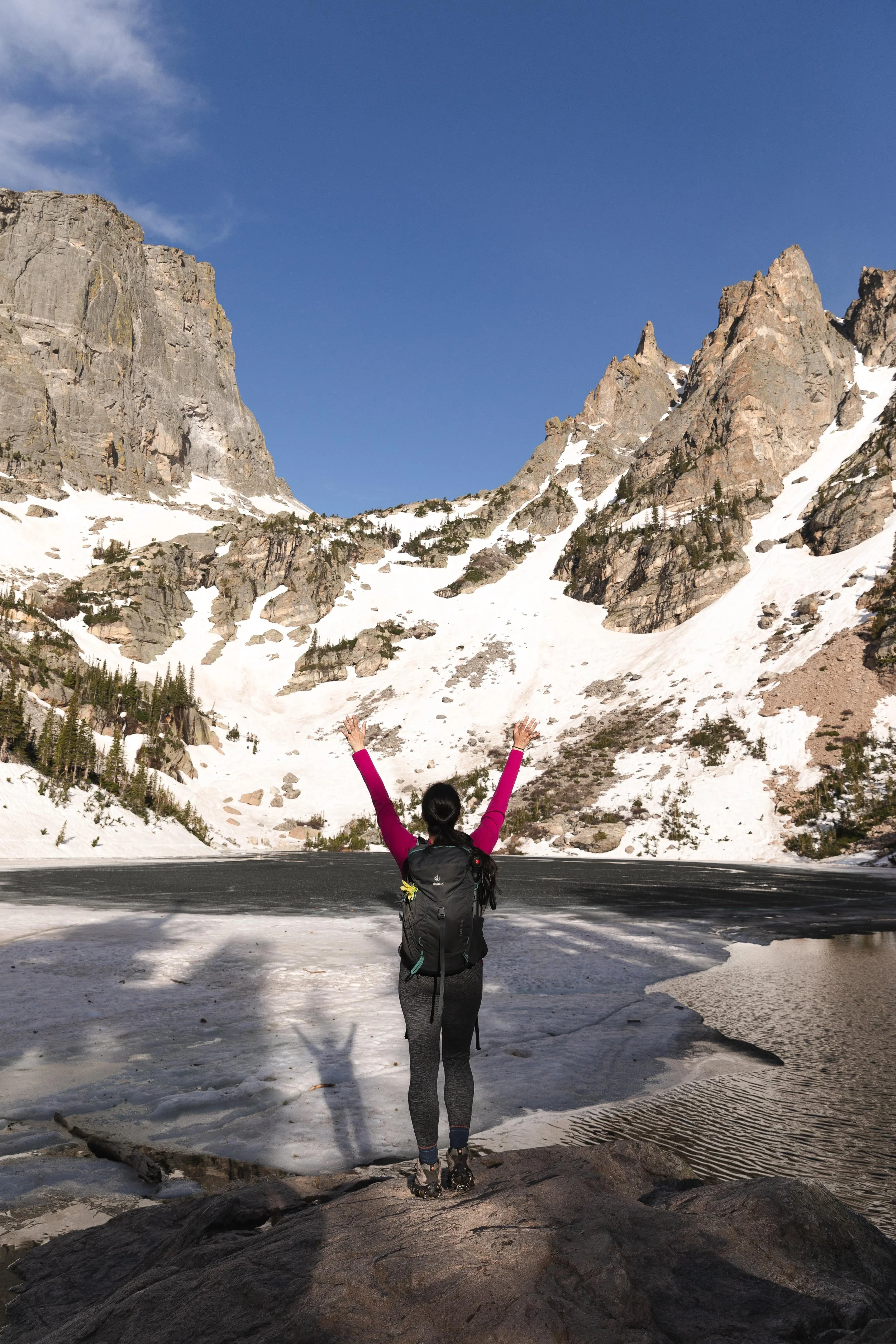
Sprague Lake is one of the best hikes for those looking for an accessible trail with beautiful views in Bear Lake Corridor. The 0.8-mile trail is one of the easiest hikes in the area and has stunning mountain views across the lake. It is the perfect family-friendly hike!

Moraine Park
And to end your day, you will visit one of my favorite areas in the park!
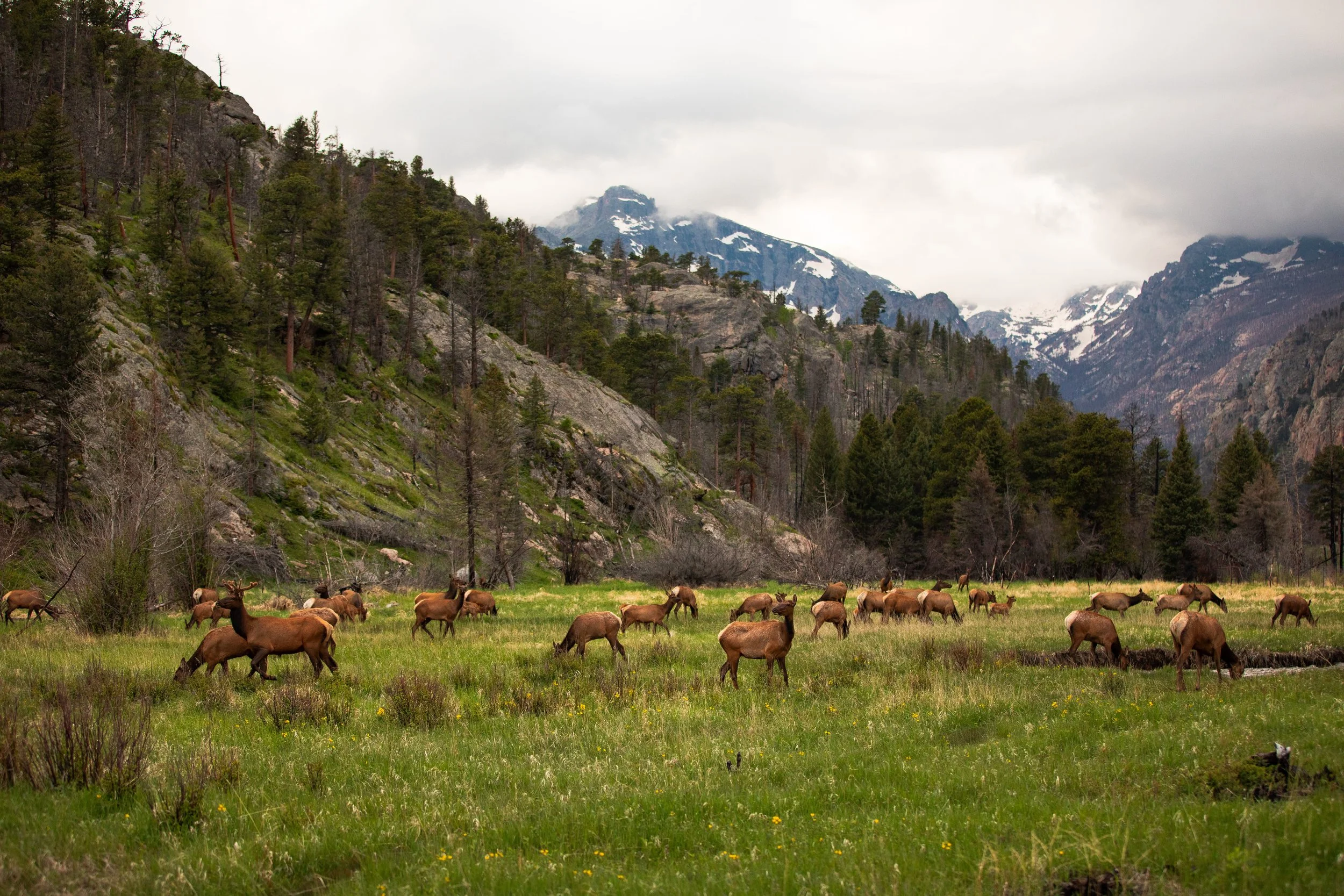
Moraine Park is one of the best areas to see wildlife in Rocky Mountain Park. Although you could see elk all day, we saw the most when we visited in the evening near sunset.
We saw herds of elk roaming around the park and hiked along the few trails in the area. Moraine Park also offers stunning views of the surrounding mountains, so I highly recommend visiting!
Rocky Mountain National Park FAQs
Is Rocky Mountain National Park Worth It?
Rocky Mountain National Park is absolutely worth it! It is one of the most visited national parks for a reason.
One of the things I love most about the national park is that it has something for everyone. You do not need to hike to enjoy the stunning mountain views, but if you want to, you have access to some amazing trails.
What Are Must-See Attractions in Rocky Mountain National Park?
Here are a few must-see attractions in Rocky Mountain National Park:
Trail Ridge Road and all its viewpoints
Alpine Ridge Trail
Toll Memorial Trail
Old Fall River Road and all its viewpoints
Bear Lake, Nymph Lake, Dream Lake, and Emerald Lake
Moraine Park
Is Rocky Mountain National Park Crowded?
Rocky Mountain National Park is one of the most visited national parks in the United States with millions of visitors each year, so it is crowded.
But do not let that deter you from visiting!
One of the best ways to avoid crowds is to enter the park for sunrise or early in the morning. Trust me, the early wake-up call is worth it to enjoy the views with fewer people.
You can also visit other sections of the park that fewer people visit, like Wild Basin and Grand Lake. These areas have beautiful views and trails with fewer crowds.
Do You Need to Hike in Rocky Mountain National Park?
No, you do not need to hike in Rocky Mountain National Park to enjoy the views. It is one of my favorite things about the park!
You have plenty of opportunities to enjoy the breathtaking views from easily accessible viewpoints and short trails. Trail Ridge Road has some of the best views you can enjoy right from your car.
But I recommend adding at least one hike to your itinerary! Some of the best trails are easy, so you do not need to hike a strenuous trail to enjoy the views.
Where Should You Stay Near Rocky Mountain National Park?
Estes Park is the best place to stay near Rocky Mountain National Park because it is close to the Beaver Meadows and Fall River entrances. It also has many accommodations, shops, and restaurants, and it is near the most popular attractions.
Because it is the best place to stay, accommodations book up quickly, so make sure to book yours as soon as you can! We booked ours last minute and only had a couple of places to choose from.
If you want to visit Rocky Mountain National Park, you are in the right place! I created this guide with everything you need to plan the best Rocky Mountain National Park 2-day itinerary.

Hey, I’m Nichole!
I am the creator behind Nichole the Nomad, the home of my explorations around the world, mountain hikes, and beautiful pictures taken along the way. I have a deep passion for capturing the world in a beautiful light and sharing my experiences.
I created this blog to share my travels, show how beautiful the world is, provide tips and tricks for traveling, and encourage you to explore. Whether you want to travel across the world or explore what’s in your backyard, I hope this blog inspires you to get outside and find your adventure!
Pin it for later!

